Broker Network & Growth Updated 2026-09-27 16 min read
How Roll-Off Brokers Operate: The Complete Breakdown
DC
Dumpster Controls Team
Editorial team, reviewed against the shipped product
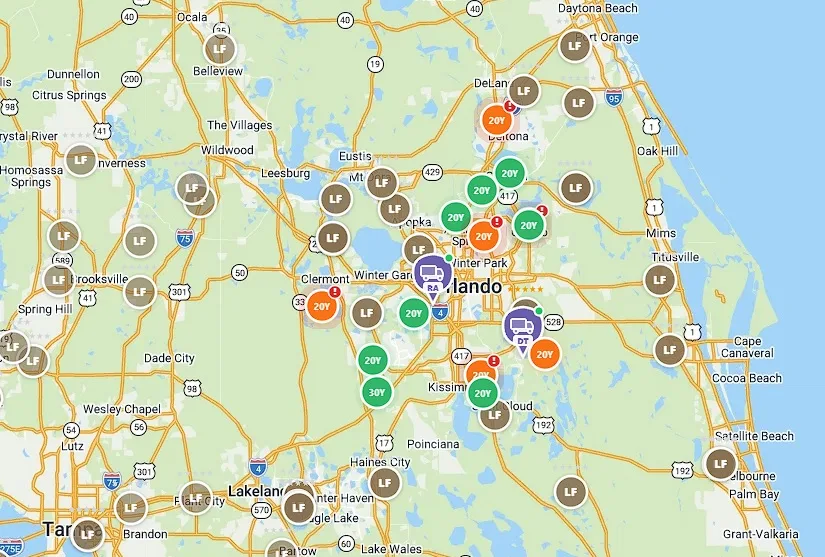
Roll-off brokers do not own trucks, employ drivers or hold accounts at the landfill. They sell the rental, and a local hauler does the work.
Understanding how they operate matters if you are a hauler weighing subcontract work, an entrepreneur looking at the brokerage model, or an owner competing with brokers for the same customers.
The dumpster broker business model
At its core, a roll-off broker runs a simple arbitrage: buy the customer, resell the delivery.
- #### 01. Generate leads
The broker spends on marketing to reach people searching for a dumpster rental. - #### 02. Quote and close
When a customer calls or books, the broker prices the job, answers questions and closes the sale. - #### 03. Subcontract
The broker hands the order to a local hauling company that delivers, picks up and dumps. - #### 04. Collect the spread
The customer pays the broker one price; the broker pays the hauler a lower one and keeps the difference.
The brokerage model in one line
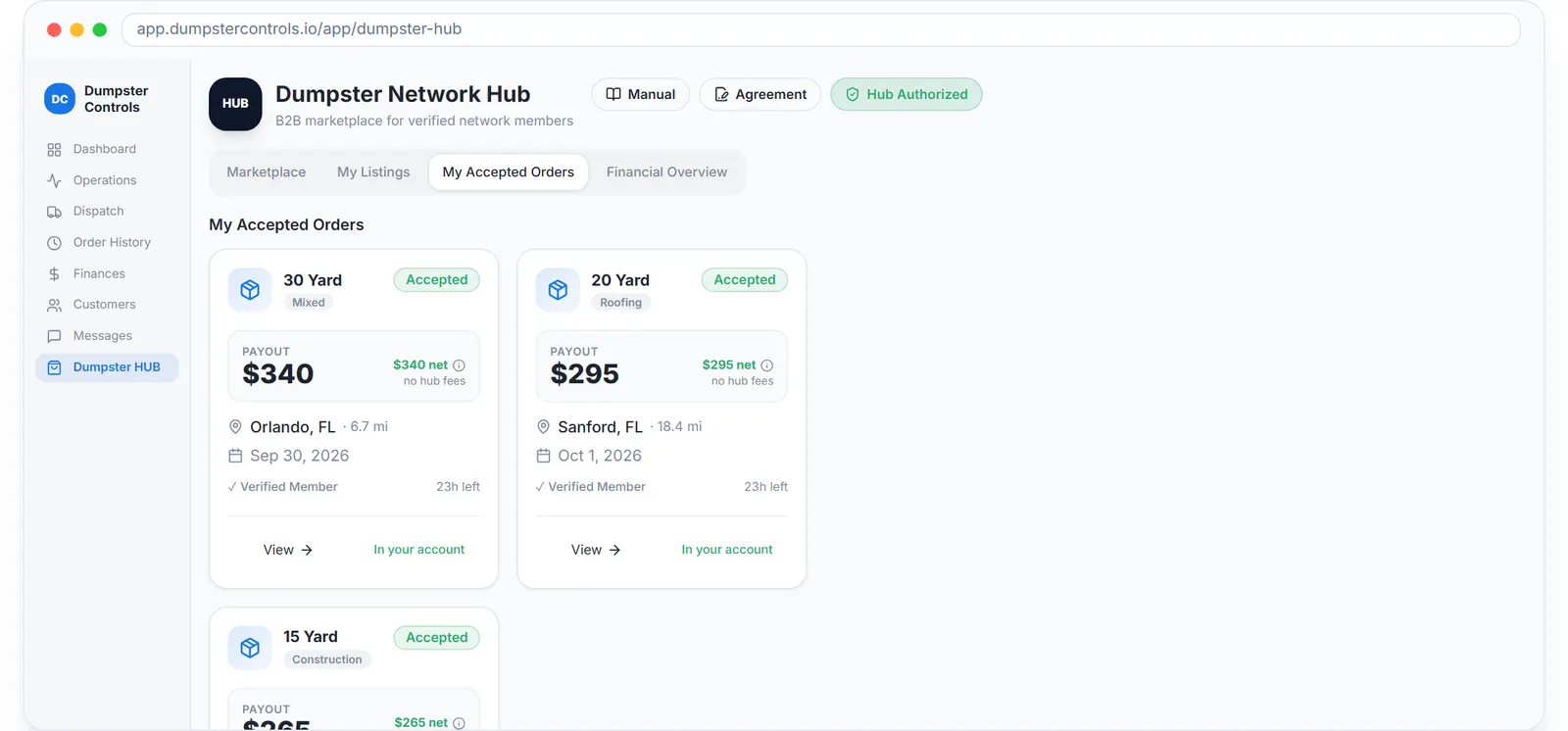
On the Dumpster Net Hub any company can play the broker's role: list an order, set the asking price, let a verified company take it. Sample data.
How dumpster brokers get customers
Lead generation is the expensive part of a brokerage, and it runs on four channels.
Paid search. Most brokers bid on terms like "dumpster rental near me", "roll-off dumpster" and city names. The cost per click depends on the metro and the season.
SEO and content. Brokers build large sites targeting long-tail searches such as "10 yard dumpster rental in" a given city. The traffic has no per-click cost but takes sustained work.
Pay-per-lead directories. HomeAdvisor, Angi and Thumbtack sell leads one at a time, at a price that varies by market and with conversion the broker cannot control.
Referral networks. Contractors, property managers and real estate agents who need dumpsters on a regular basis.
How brokers manage haulers
The operational headache for a broker is keeping a reliable bench of haulers who deliver on time. The traditional tools are the phone, an email chain, a spreadsheet of partners and prices, and two sets of invoices: one to the customer and one from the hauler.
It works at small volume. Past that point the broker spends a large share of the week on coordination instead of sales, and every missed handoff becomes a customer complaint.
The hauler's side of dumpster broker work
For a hauling company, broker work is a trade: volume you did not have to market for, in exchange for margin and the customer relationship.
What you gain
No marketing cost. Jobs that fill gaps in the schedule. Customers in areas where you do not advertise. A steady weekly flow once the relationship is established.
What you give up
Less per job than a direct order. The customer stays with the broker, so the reorder does too. Service standards you did not set. And, with some brokers, payment on net terms that strain cash flow.
Dumpster broker software: the peer-to-peer model
Traditional brokering runs on personal relationships and manual work. A network built into dumpster rental software replaces the phone tree with a board.
- Matching is automatic. A listed job is visible to authorized companies nearby; whoever takes it first gets it.
- Payment sits in escrow. Funds are held until the executor confirms delivery with a photo, then released. No invoice chasing.
- The price is on the card. The executor sees the asking amount and a Hub fee line of $0 before confirming.
- The order lands in dispatch. A taken order appears in the executor's operations as regular work, ready to assign to a driver.
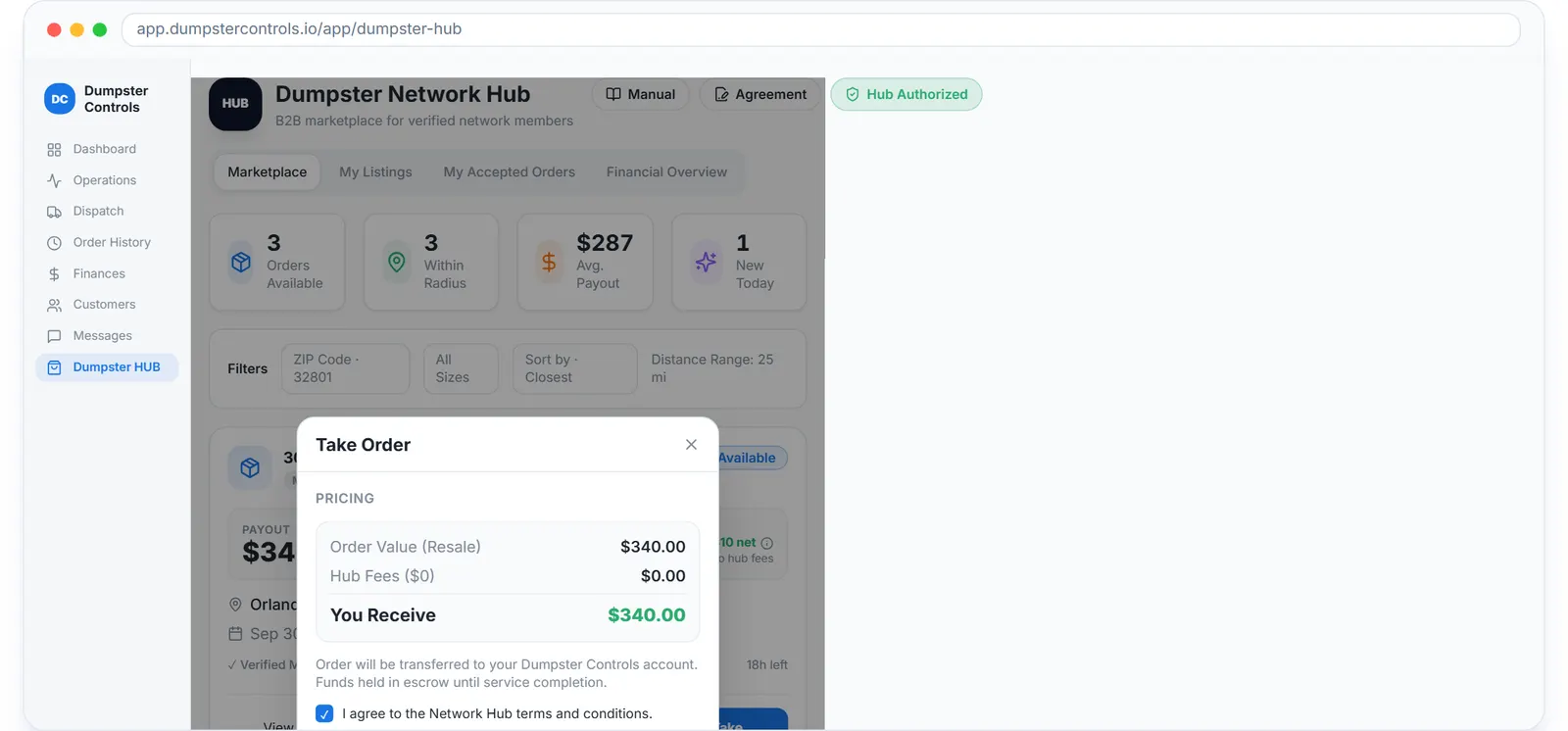
A listing as the executor sees it: size, price, distance. The amount you receive is the full asking amount. Sample data.
The difference from a traditional broker is the shape of the relationship. Instead of one broker above many subcontractors, any company can list overflow and any company can take it, which is what the dumpster broker software page describes in detail.
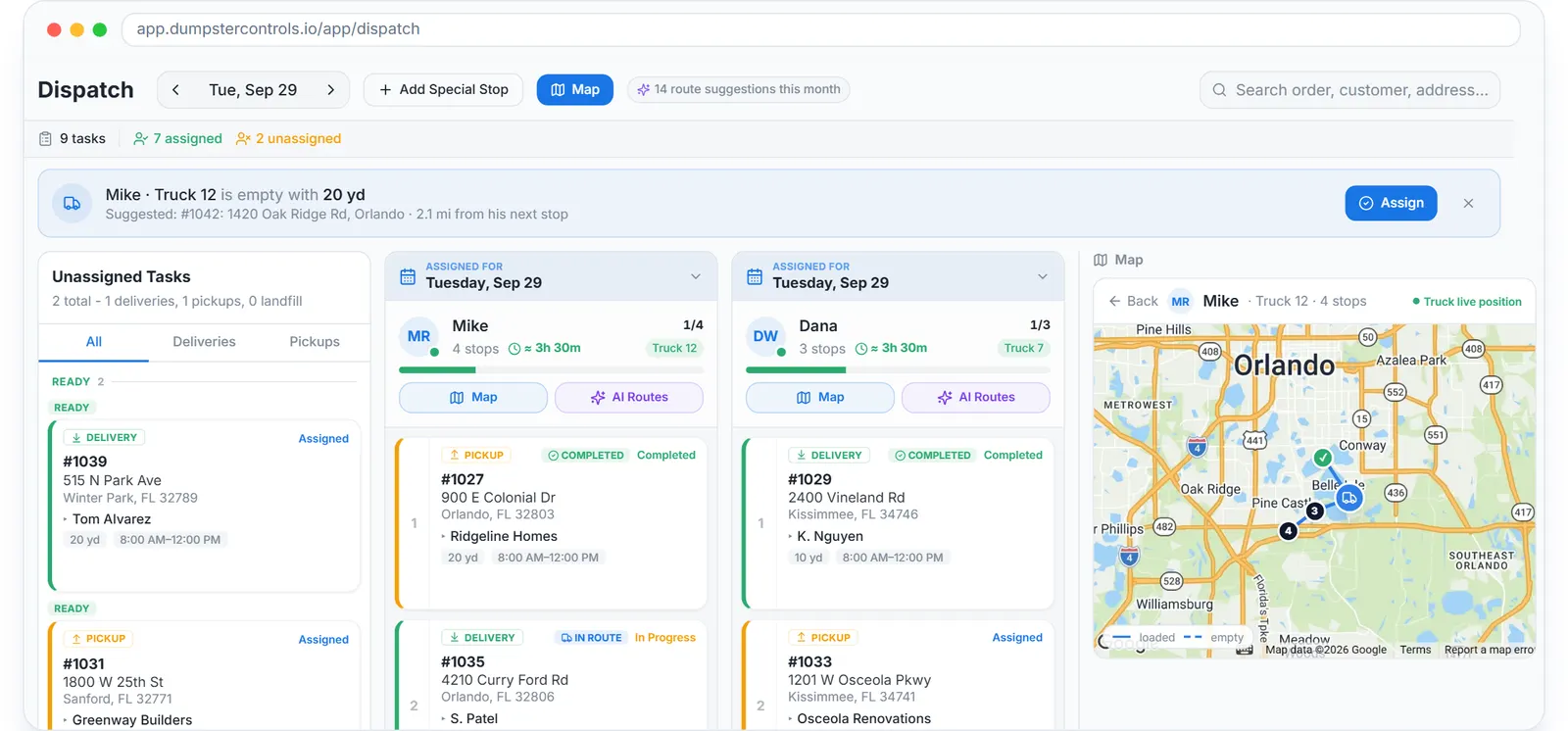
A taken Hub order shows up on the dispatch board like any other job. Drag it onto a driver and it is assigned. Sample data.
How to evaluate a dumpster broker before you subcontract
If you are a hauler considering broker work, five questions separate a good partner from an expensive one.
- Payment terms. Prefer brokers who pay quickly, or platforms that settle from escrow on delivery.
- Volume. Ask what a typical week looks like for your area and your sizes.
- Communication. How fast do they respond when a job goes sideways, and are job details complete upfront?
- Customer expectations. Are the delivery windows they promise ones your operation can keep?
- Exclusivity. Avoid any arrangement that stops you from serving direct customers or other partners.
For the entrepreneur's angle, read how to become a dumpster broker. For the hauler's decision, dumpster broker vs direct sales lays out the trade-offs channel by channel.
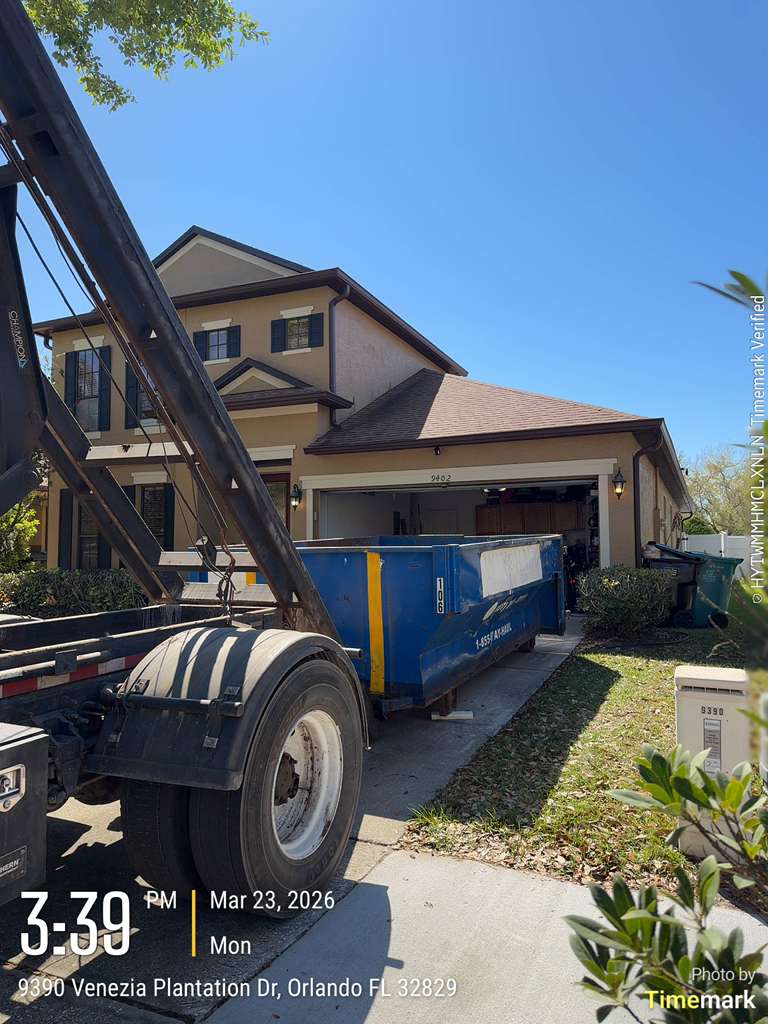
Metro Roll-Off staging a residential delivery brokered through a partner network. Photo courtesy of Metro Roll-Off , Orlando, FL Used with permission.
Explore the platform
- Dumpster Rental Software: the complete platform overview
- Software for Dumpster Companies: built for roll-off haulers
- Dispatch Software: drag-and-drop dispatch board
- Booking Software: online booking widget
- Driver App: free iOS & Android
- Free Plan: Free, no credit card
- Help Center: 423 step-by-step guides to every module
← PreviousHow to Find Dumpster Subcontract Jobs in FloridaNext → How to Expand Your Dumpster Territory Using Partner Networks
Frequently asked questions
Is Dumpster Controls really free?
Yes. The entire app is free for any company at any fleet size: dispatch, online booking, the driver app, invoicing, the Tresha AI assistant and every other feature, with no monthly fee, no trial period and no credit card to sign up. The only cost on the free plan is optional card processing when a customer pays by card through the platform: 2.99% plus $3.99 per transaction on the free plan. The entire app is free; an optional $169 per month plan lowers that to 2.99% plus $0.30 and adds a Sponsored spotlight in the public company directory. Prices as published on dumpstercontrols.io/pricing on 2026-09-23.
Do you charge per driver, per truck or per order?
No. There is no per-driver, per-truck, per-user or per-order fee, and no order limit. A company with one truck and a company with twenty pay the same for the software: nothing.
Is there a contract?
No. There is no contract, no minimum term and no setup fee. You create the account yourself, and on the free plan there is nothing to cancel because nothing is billed. The optional $169 lower card rate plan is billed month to month.
Which countries and languages are supported?
Dumpster Controls serves hauling companies in the United States and Canada. The app interface and the Tresha AI assistant are available in English, Spanish and Portuguese. The public pages, such as the blog, the help center and the landfill finder, are in English.
How do I switch from another dumpster software?
Create a free account at dumpstercontrols.io/login, with no sales call and no credit card. Then import your customers from a CSV file using the template provided in the app; past orders can also be imported from a CSV. Container sizes and pricing are set up in Settings. The landfill database, with 1,750 active US and Canadian landfills as counted on 2026-10-01, is already loaded, so disposal sites do not need to be typed in. Step-by-step guides are at dumpstercontrols.io/help.