Broker Network & Growth Updated 2026-09-27 15 min read
How to Become a Dumpster Broker: A Complete Guide
DC
Dumpster Controls Team
Editorial team, reviewed against the shipped product
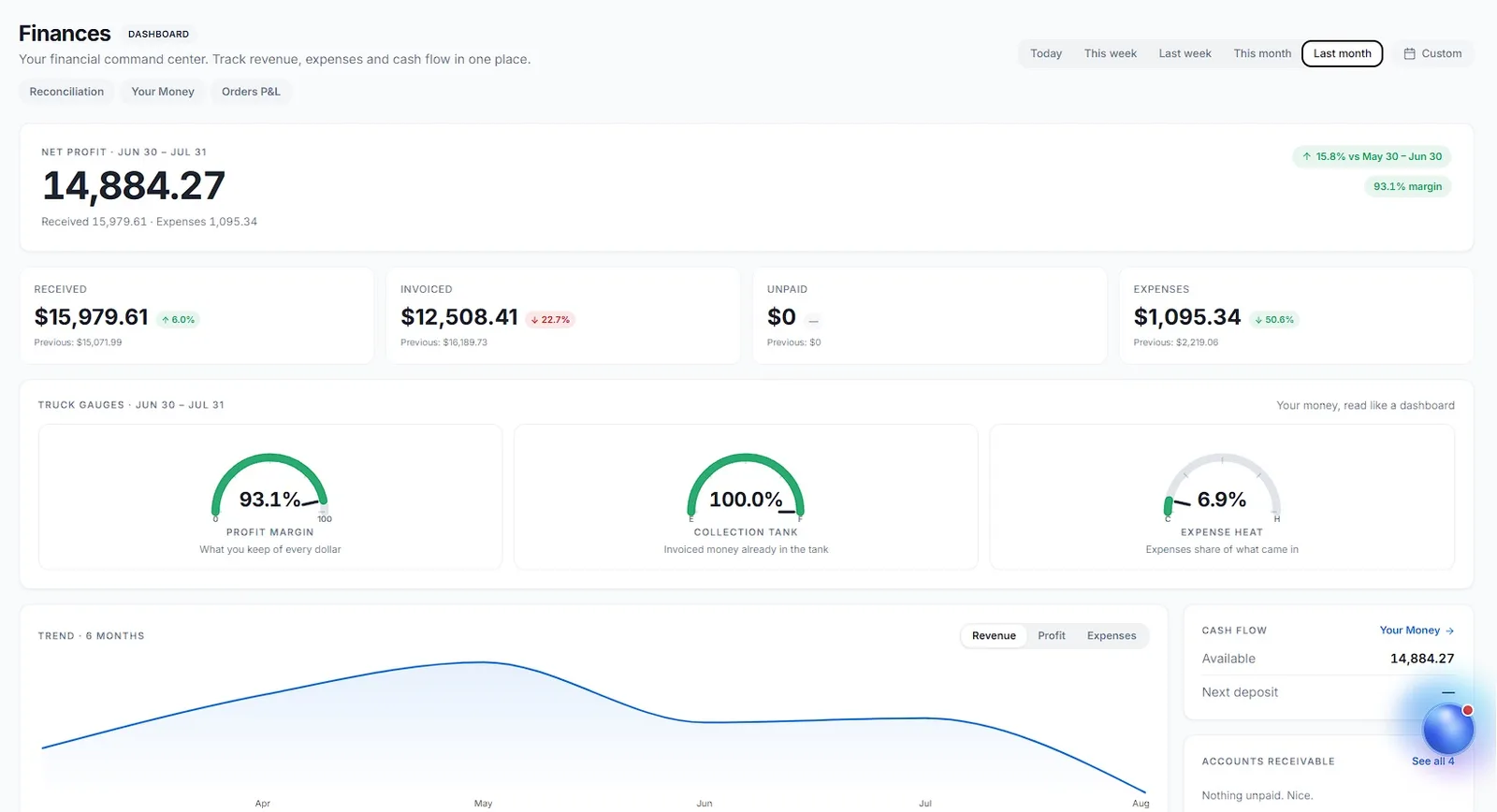
A dumpster brokerage sells rentals it does not deliver. No trucks, no drivers, no insurance on equipment, no landfill account: the broker finds the customer and a local hauler does the work.
This guide covers how the model works, what it takes to start, and how dumpster broker software changes the hardest parts.
What a dumpster broker actually does
A broker sits between customers who need a dumpster and hauling companies that own them. The broker's job has four parts: find the customer, quote and close, handle the customer relationship, and hand the order to a hauler who delivers.
The value is in the match and in the customer experience. Everything physical belongs to the partner.
Why brokering is the low-capital way in
The economics of a dumpster brokerage
A broker earns the spread: the customer pays one price, the hauler receives a lower one, and the difference stays with the broker. How wide that spread can be depends on the local market and on what haulers will accept.
Startup costs are low compared with a fleet. You need business registration and insurance, a website and marketing budget, a phone system, and a system to track orders.
One note on software, because it comes up often. The Dumpster Controls free plan is for companies that own and operate their own trucks, including the overflow they place with partners. A brokerage-only business runs on the paid Enterprise plan; the pricing page explains the line.
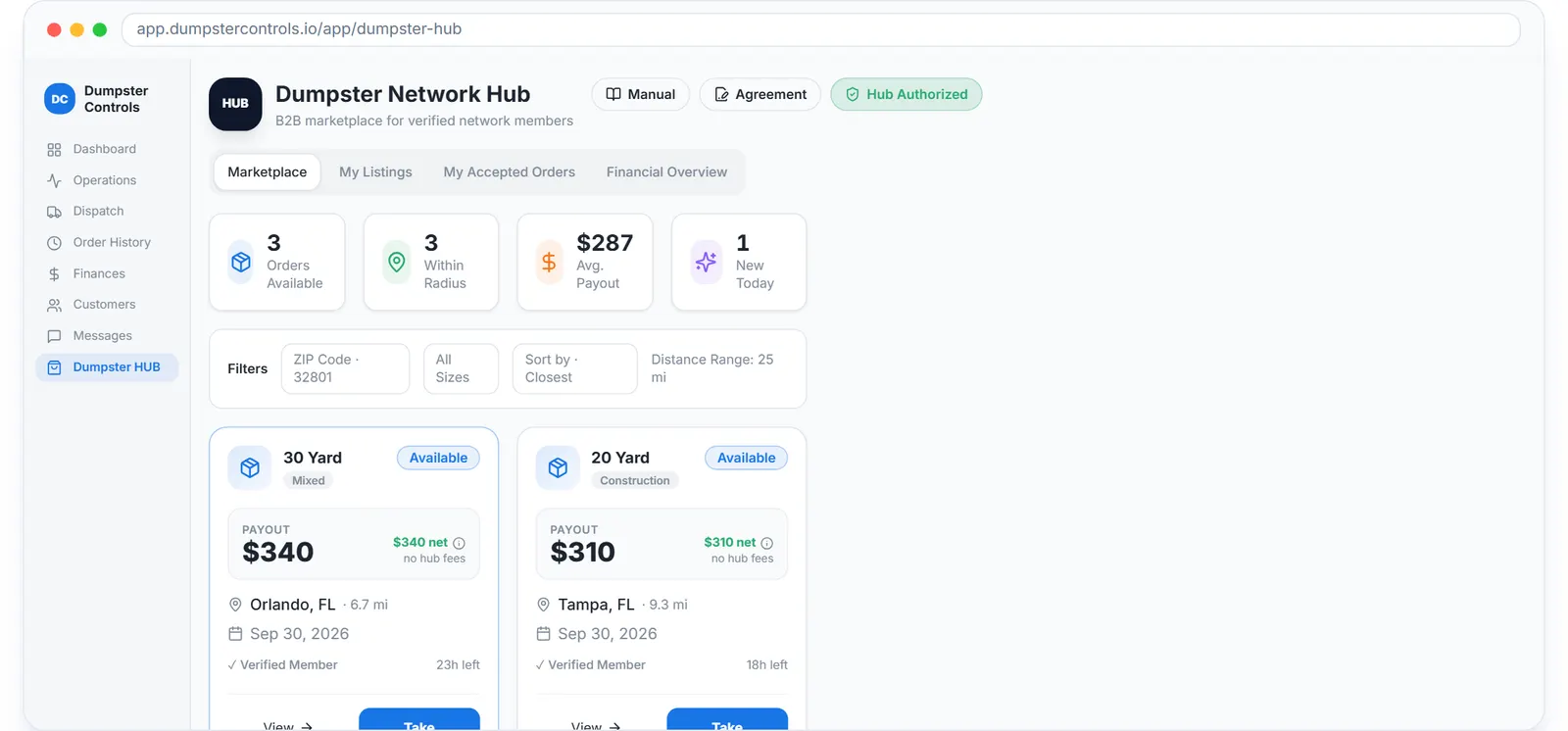
The Dumpster Net Hub: list an order with your asking price, and an authorized company nearby takes it. Sample data, real app.
How to start a dumpster brokerage, step by step
- #### 01. Research your market
Count the hauling companies already serving the area, learn the going prices for 10, 20 and 30-yard containers, check what the local landfills charge per ton, and confirm there is enough construction and renovation activity to sustain demand. - #### 02. Build your hauler network
Your reputation rides on your partners. Negotiate pricing by size, response time for same-day and next-day delivery, payment terms and service area with each hauler. Or skip the manual bench: on the Dumpster Network HUB you list the job and an authorized hauler takes it, with payment held in escrow until delivery is confirmed. - #### 03. Set up your operations
Even without trucks you need an order system, a phone line with call tracking, a website built for local search, card payment processing, and a standard service agreement your customers accept at booking. - #### 04. Develop your lead engine
Paid search on 'dumpster rental near me' and city terms, a Google Business Profile with reviews, long-tail content, referral partnerships with contractors and property managers, and pay-per-lead directories when the math works. - #### 05. Win on customer experience
You do not control the truck, so your edge is the phone: fast quotes, clear delivery windows, proactive updates when something slips, and a price with no surprises on the invoice.
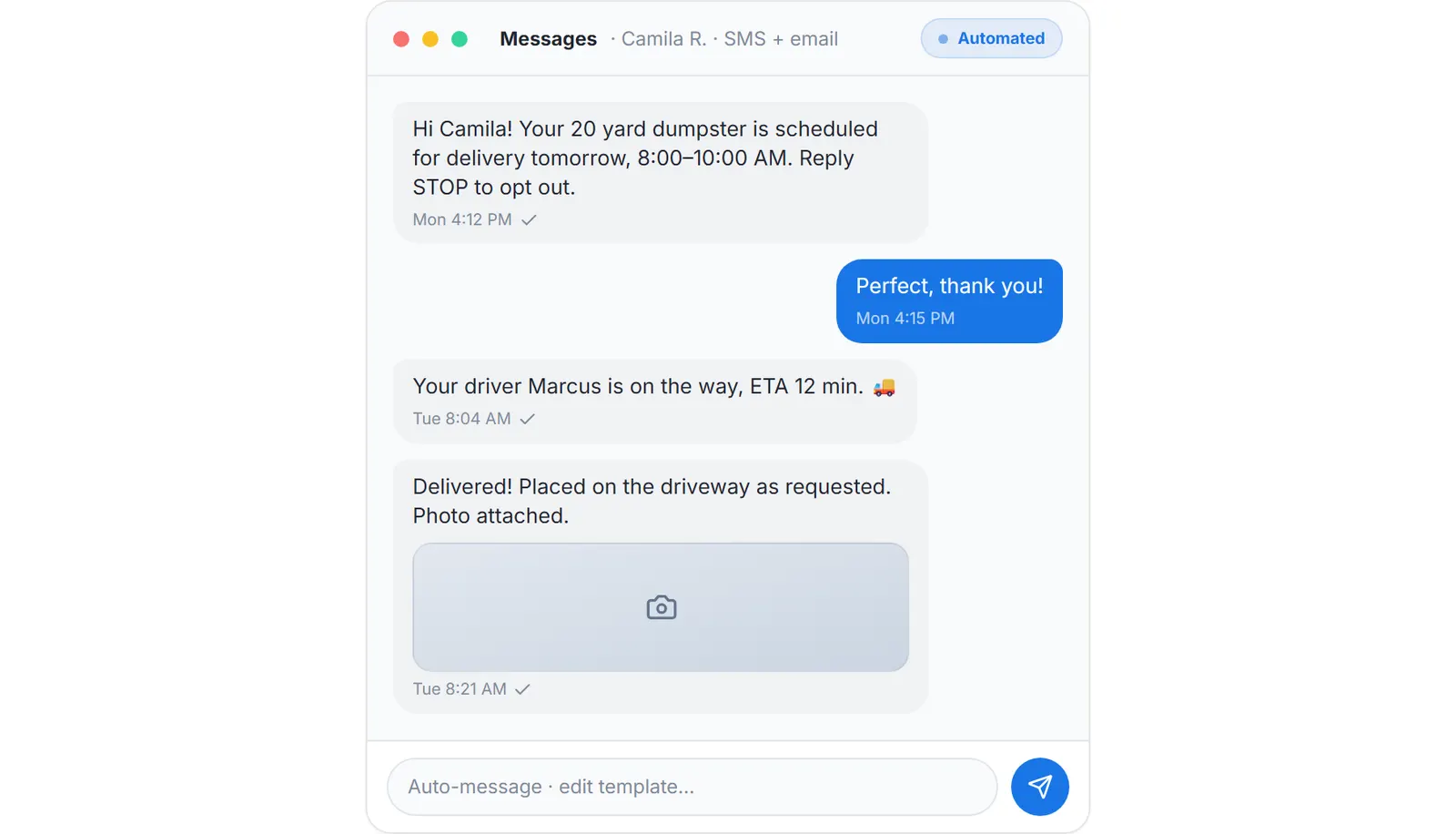
The broker's product is the conversation. An SMS thread per order keeps delivery windows and changes in one place. Sample data.
Common challenges for dumpster brokers
Hauler reliability
When a partner misses a delivery, the customer blames you. Vet partners and track their on-time record.
Margin pressure
As more brokers enter a market, the spread narrows. Brokers who compete on service keep theirs longer.
Cash flow
Customers who pay on terms and haulers who expect payment quickly leave the broker in the middle. Card payment at booking removes most of it.
Limited control
The condition of the can, the driver's manners and the pickup time all belong to the partner. Your agreement and your follow-up are the only levers.
Dumpster broker software: the digital network
Traditional brokering runs on phone calls and personal relationships. A digital network automates the matching, the dispatch handoff and the payment.
On the Dumpster Network HUB, built into dumpster rental software from Dumpster Controls, a company lists an order with an asking price, and an authorized company takes it. The executor receives the full asking amount, the Hub charges no marketplace fee, and the funds sit in escrow until delivery is confirmed with a photo.
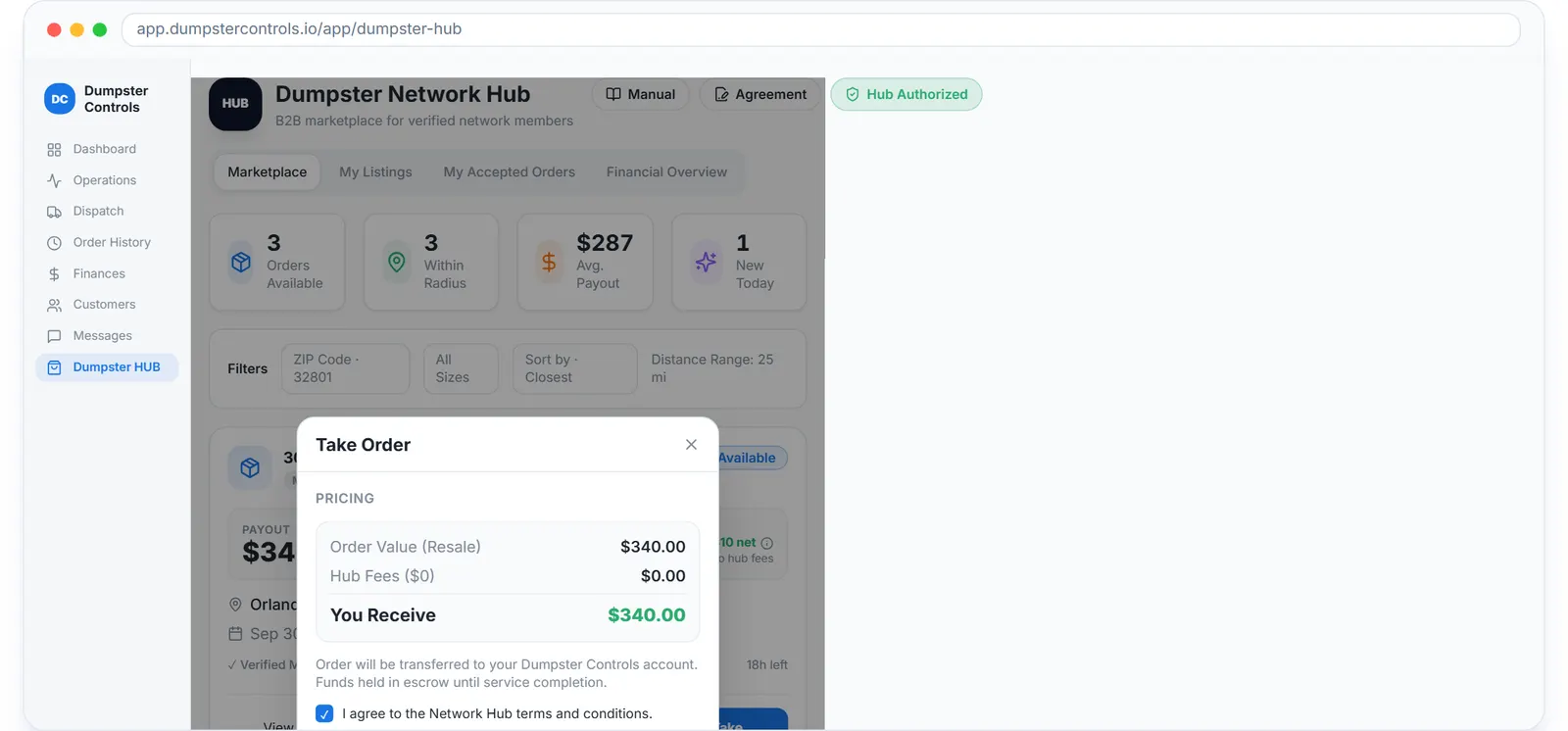
What the hauler sees before taking a listed job: size, price, distance, and the amount received. Sample data.
Is dumpster brokering right for you?
Brokering suits people with strong sales and marketing skills who prefer low capital over heavy assets, and who are comfortable resolving customer issues remotely. It suits less well anyone who wants direct control over the operation or hands-on work with trucks.
Start by researching your local market and talking to haulers who are open to subcontracting. Read how roll-off brokers operate for the day-to-day of the model.
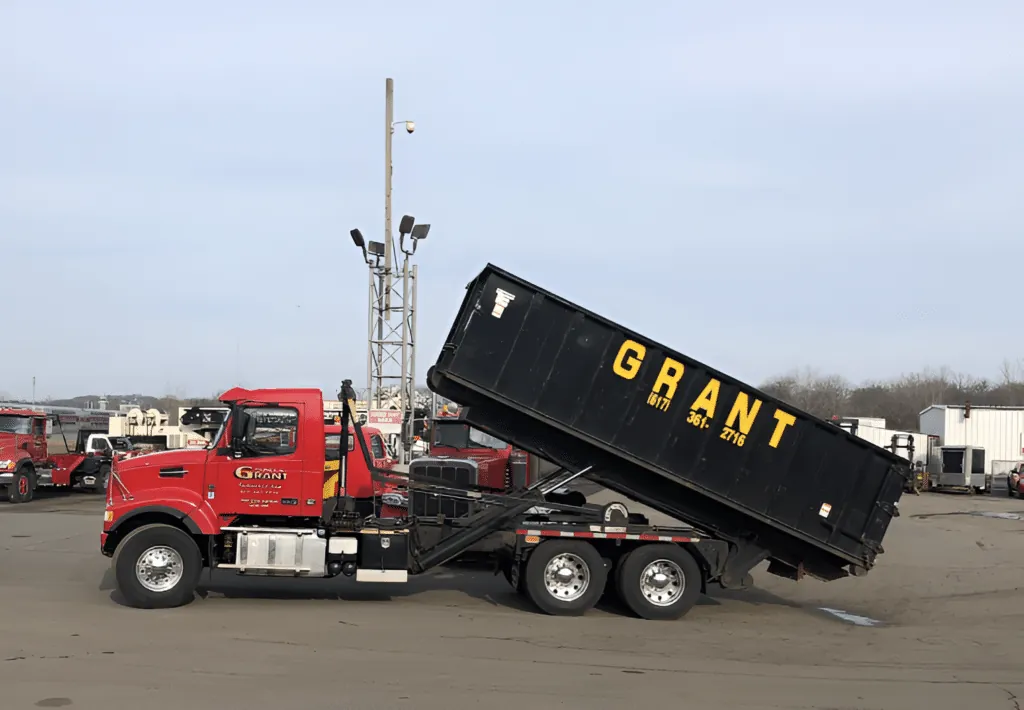
G. Grant Industries operates as both hauler and broker in the Boston market. Photo courtesy of G. Grant Industries, Boston, MA (617) 361-2716Used with permission.
Explore the platform
- Dumpster Rental Software: the complete platform overview
- Software for Dumpster Companies: built for roll-off haulers
- Dispatch Software: drag-and-drop dispatch board
- Booking Software: online booking widget
- Driver App: free iOS & Android
- Free Plan: Free, no credit card
- Help Center: 398 step-by-step guides to every module
← PreviousDumpster Marketplace Software: How Haulers Share Demand & Grow RevenueNext → How to Find Dumpster Subcontract Jobs in Florida
Frequently asked questions
Is Dumpster Controls really free?
Yes. The software is free: dispatch, online booking, the driver app, invoicing, the Tresha AI assistant and every other feature, with no monthly fee, no trial period and no credit card to sign up. The only cost on the free plan is optional card processing when a customer pays by card through the platform: 2.99% plus $3.99 per transaction on the free plan. An optional Unlimited plan at $169 per month lowers that to 2.99% plus $0.30. Prices as published on dumpstercontrols.io/pricing on 2026-09-23.
Do you charge per driver, per truck or per order?
No. There is no per-driver, per-truck, per-user or per-order fee, and no order limit. A company with one truck and a company with twenty pay the same for the software: nothing.
Is there a contract?
No. There is no contract, no minimum term and no setup fee. You create the account yourself, and on the free plan there is nothing to cancel because nothing is billed. The optional Unlimited plan is billed month to month.
Which countries and languages are supported?
Dumpster Controls serves hauling companies in the United States and Canada. The app interface and the Tresha AI assistant are available in English, Spanish and Portuguese. The public pages, such as the blog, the help center and the landfill finder, are in English.
How do I switch from another dumpster software?
Create a free account at dumpstercontrols.io/login, with no sales call and no credit card. Then import your customers from a CSV file using the template provided in the app; past orders can also be imported from a CSV. Container sizes and pricing are set up in Settings. The landfill database, with 1,750 active US and Canadian landfills as counted on 2026-10-01, is already loaded, so disposal sites do not need to be typed in. Step-by-step guides are at dumpstercontrols.io/help.