Growth Strategy
Dumpster Marketplace Software : How Haulers Share Demand and Grow Revenue
An idle truck costs you money. So does the customer you turn away on a full week. A marketplace between haulers fixes both, and on Dumpster Controls it has no hub fees.
By Daniel Teixeira Founder, Dumpster ControlsUpdated September 28, 2026 2 min read
Dumpster marketplace software connects companies that have more orders than trucks with companies that have more trucks than orders. On Dumpster Controls it is the Dumpster Net Hub: a company lists an order it cannot cover with the amount it will pay, a nearby hauler takes it, and the money waits in escrow until delivery is confirmed. There are no hub fees, and the company that runs the job receives the full asking amount.
What is a hauler marketplace?
A board inside your software where a company lists an order it cannot cover, with the price it will pay, and a nearby hauler takes it. The seller keeps the customer; the executor fills an empty slot.
In practice: The Hub lives inside the same app you dispatch from, so an accepted order lands on your board like any other. It is one module of dumpster rental software, not a second login.
Why dumpster company owners want a marketplace now
The week swings
Demand is uneven
Construction cycles, weather and season swing the week. A marketplace sells the peak and fills the valley.
Fixed costs
Idle trucks still cost
The truck payment, the insurance and the driver do not pause when the truck sits. A taken order turns that day into revenue.
Coverage
Customers expect next-day
No single company covers every ZIP every day. A network can.
How the Dumpster Net Hub works
1
An order you cannot cover
Wrong territory, full week, wrong size.
2
List it on the Hub
With the amount you will pay the company that runs it.
3
A nearby company takes it
Companies in the area see the listing, review the details and take it.
4
The executor runs it
Delivery and pickup, with photos, from its own dispatch board.
5
Escrow releases
Funds held while the order is in progress release to the executor once delivery is confirmed.
The seller side: keep the customer, keep the margin
Without a marketplace, an order you cannot run has three outcomes: decline it, send it to a competitor, or stretch the crew. The Hub adds a fourth: list it, keep the customer, and keep the difference between what the customer paid you and what you listed it for.
You set that difference yourself when you set the asking price. The manual walks through it in the Hub module.
The executor side: fill the open slot, with no hub fees
For the company taking the order, a Hub job is revenue on a truck that was already going out. The listing shows the price and the distance, so you can judge whether it fits tomorrow's route before you take it.
Read it: The executor receives the full asking amount. Nothing is deducted by the Hub; the only fee anywhere is the standard card processing of your plan. Details, vendor by vendor, at dumpster rental software cost.
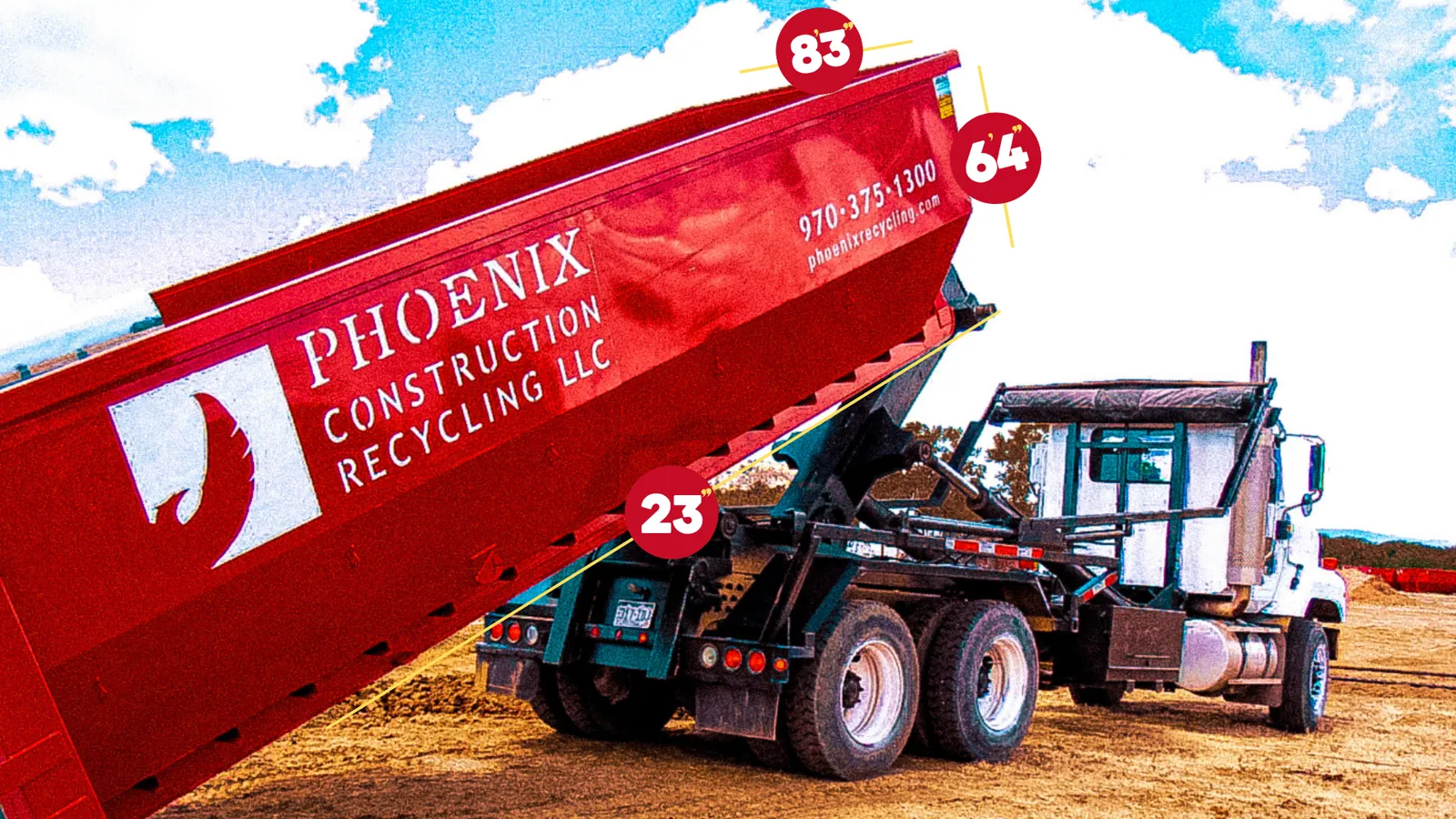
Phoenix Recycling shares overflow demand through the Hub. Photo courtesy of Phoenix Construction Recycling LLC , Colorado 970-375-1300Used with permission.
Five use cases for dumpster marketplace software
Seller
Out-of-territory orders
A customer 80 miles away finds your website. List it for a company local to them.
Seller
Full weeks
The fleet is booked Monday to Wednesday. List the overflow instead of pushing the customer to next week.
Seller
Wrong size
The customer needs a 40-yard and you run up to 30. List it for someone with the can.
Seller
A new city
Run online booking in a metro you do not serve yet and list every order there. More in how to expand your territory using partner networks.
Executor
A slow Tuesday
Open the Hub and take what fits the route.
What this means for you
- The order you would have declined becomes margin without a truck leaving the yard.
- The slot you could not fill becomes a paid stop on a route you were already driving.
- Everything stays inside the app you already dispatch from; no second login.
Dumpster marketplace or traditional broker
| Feature | Dumpster Net Hub No hub fees | Traditional broker Negotiated per job |
|---|---|---|
| Cut taken | None; standard card processing only | Part of the price, negotiated per job |
| How a job is assigned | Listed on the board, taken by a nearby company | Phone calls |
| Proof of work | Photos and GPS from the driver app | Phone, email, paper |
| Who keeps the customer | The selling company | The broker |
| Payment | Escrow, released on confirmed delivery | Terms set by the broker |
For the broker model itself, read how roll-off brokers operate, and for the network of brokers and haulers on the platform, dumpster broker network.
Trust and money on the Hub
Who gets in
Access is reviewed
A company requests Hub access, uploads its insurance and business registration, signs the Network Hub agreement and waits for review.
Escrow
Money runs through the platform
Funds are held while the order is in progress, released after the executor confirms delivery with a photo, and tracked as Pending, Held, Released or Refunded.
Rule
No cash on Hub orders
Cash transactions are not allowed on the Hub, so every job has a paper trail.
Getting started with the Hub
1
Create a free account
Dumpster Controls is free for any fleet size, with no card on file.
2
Request Hub access
Upload your insurance and business registration, and sign the agreement.
3
Connect Stripe
So escrow can pay you when you run a Hub job.
4
Take the first job
Open the Hub, read the listings near you, and take the first one that fits.
The Hub is available in the United States today, and the Canada guide covers how Canadian companies run everything else.
Dumpster marketplace software: frequently asked questions
What is a dumpster marketplace?
A dumpster marketplace is a network inside the software where roll-off and junk removal companies list orders they cannot cover and other haulers take those orders at the listed price. The seller keeps its customer; the executor fills an open slot with paid work. The Dumpster Net Hub is the marketplace built into Dumpster Controls.
How is a marketplace different from a broker?
A broker finds the customer, calls haulers and negotiates each job by hand, keeping part of the price. On the Hub the seller lists the order with the price it will pay, a nearby company takes it, funds sit in escrow and release to the executor after delivery is confirmed with a photo. There is no Hub fee and no percentage cut.
Is there a fee to sell or take orders?
No. There are no hub fees: no listing fee, no subscription and no percentage cut, and the executor receives the full asking amount. The only cost anywhere is the standard card processing fee of your plan, charged once when the card payment is processed, exactly like a regular order.
Do I lose the customer if I sell an order on the Hub?
No. The customer booked and paid with you. The executor runs the delivery and pickup for the price you listed, and you keep the relationship for the next order.
Can I expand into a new city without buying trucks?
Yes. Take the order through your own online booking, list it on the Hub, and a company already working in that city runs it. You build a presence without a truck payment.
How does the Hub handle money?
All payments run through Dumpster Controls. Funds are held in escrow while the order is in progress and released to the executor after it confirms delivery with a photo. The Financial Overview tab tracks each order as Pending, Held, Released or Refunded. Cash transactions are not allowed on the Hub.
Who can use the Hub?
Companies on Dumpster Controls that request Hub access, upload their insurance and business registration, and sign the Network Hub agreement. The request is reviewed and you are notified once approved. The Hub is available in the United States; it is not available in Canada yet.