Industry Trends Updated 2026-09-27 11 min read
The Future of Roll-Off Software : Why Networks Win
DC
Dumpster Controls Team
Editorial team, reviewed against the shipped product
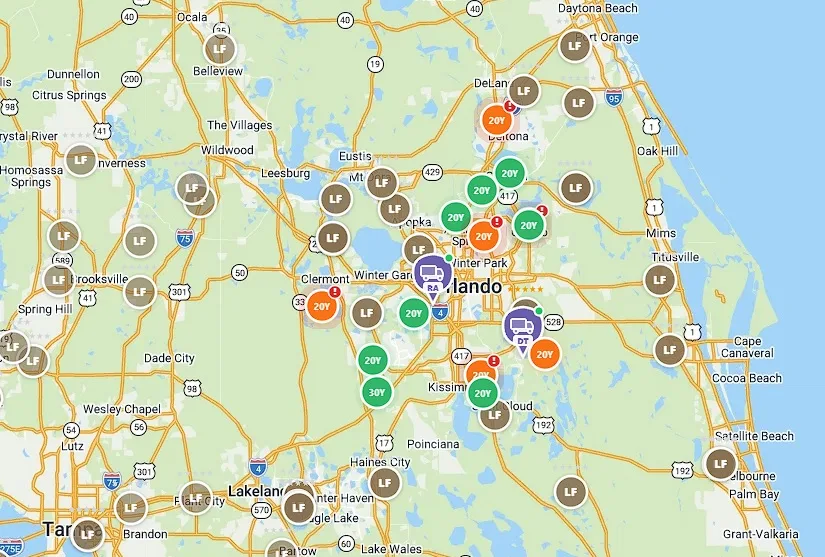
For ten years, dumpster rental software has been about one thing: managing what you already have. Dispatch, invoicing, customers. Important, and now table stakes.
The next wave is about growth: platforms that help you get more orders, reach new markets and put idle trucks to work. The haulers who see it first will have the advantage.
The Free Forever Promise
Free means free. Forever.
The future of roll-off software is network-based, AI-assisted and free with unlimited orders. Dumpster Controls does all three today.
$0
Monthly fee
Ever. No surprise charges.
$0
Setup fee
No onboarding cost.
$0
Per-user fee
Unlimited admins, drivers, dispatchers.
$0
Annual contract
Cancel anytime. We never auto-charge.
How we make money: only when you opt in, and the numbers are public. The software is free with unlimited orders and no per-order software fee. If you choose to collect a customer’s card payment through Dumpster Controls, the processing fee is 2.99% + $3.99 per card transaction on the free plan, or 2.99% + $0.30 (the standard Stripe rate) on the optional $169/month lower card rate plan. Take payment by cash, check, Zelle or any other way and you pay nothing at all. Beyond that, our revenue comes from the optional lower card rate plan and from equipment partners and sponsors advertising in the app and on our public directory; our marketplace, the Dumpster Net Hub, charges zero marketplace fees. Run your own business your way and you never pay to use the software. It’s the only model that lets a 1-truck owner-operator run on the same software as a 50-truck fleet.
Counted in our production database on October 1, 2026. Updated monthly.
400+
Companies on the platform
US and Canada
35
States, plus Canada
Where those companies operate
2,700+
Dumpsters tracked
Active units in inventory
1,750
Landfills in the database
With fees, open data
The isolation problem in roll-off dumpster software
Most hauling companies operate alone. You have your trucks, your customers, your territory. When demand beats capacity you turn people away; when it drops, trucks sit in the yard.
Think about how strange that is. There is a hauler 30 miles from you with an empty truck today, and you have a customer you cannot serve. Neither of you knows about the other.
What a network-based platform looks like
A network platform connects haulers into one shared board, as collaborators rather than competitors. It is the Uber model applied to dumpster rental, but between businesses and built for the roll-off cycle.
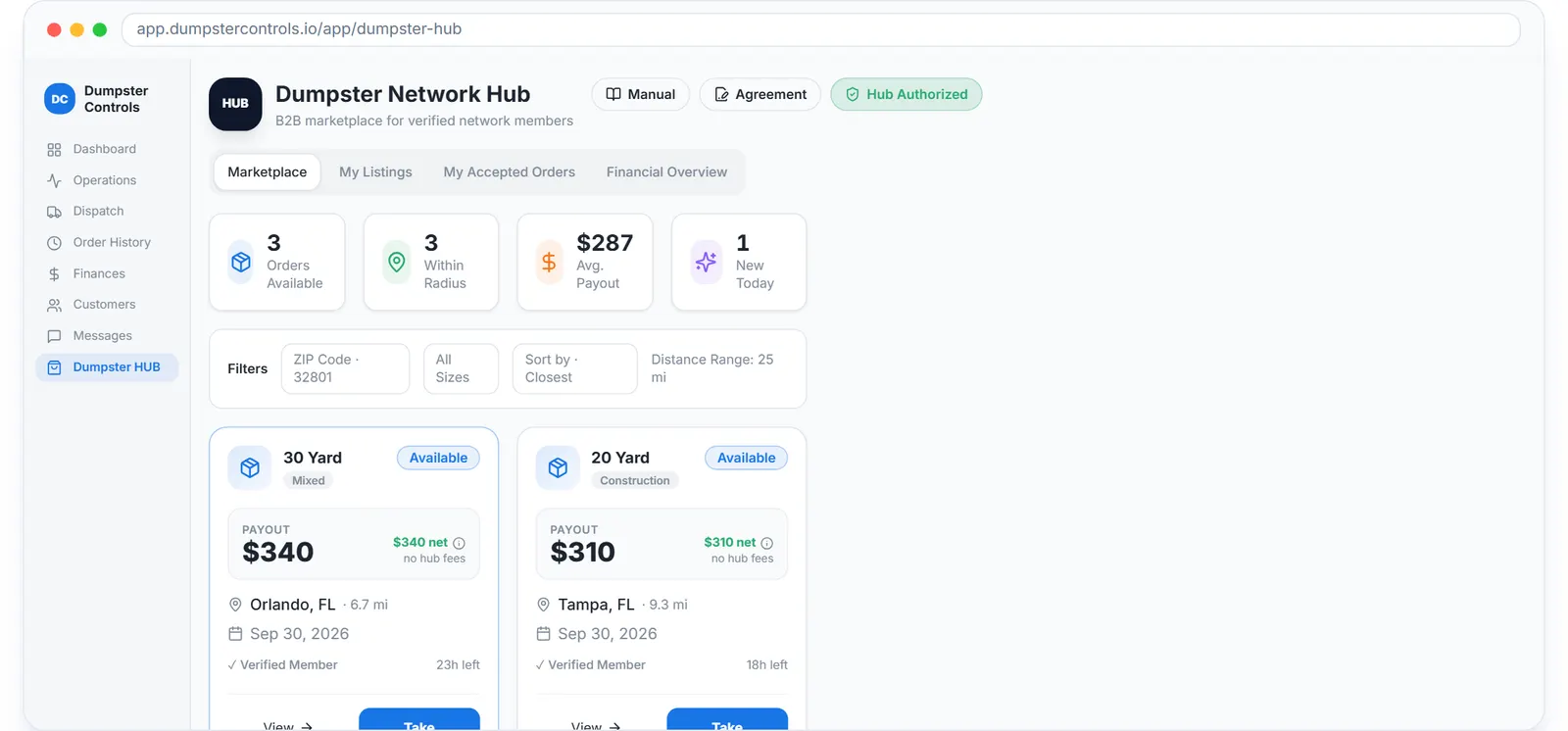
The real Hub marketplace with a new job posted nearby, sample data.
Overflow sharing
Overbooked this week? List the extra orders. Another hauler runs them and you keep the customer.
Demand access
Slow Tuesday? Read the listings near you and take the one that fits the route.
Broker access
Brokers list jobs on the same board. No phone tag.
Visible prices
See what orders are listed for in your market, in real time.
This pattern has played out before
Every logistics industry has gone through the same transformation.
| Industry | Before networks | After networks |
|---|---|---|
| Ride-hailing | Taxi dispatchers | Uber, Lyft |
| Freight | Phone-based brokers | Convoy, Uber Freight |
| Food delivery | Restaurant delivery teams | DoorDash, Grubhub |
| Vacation rentals | Local property managers | Airbnb, VRBO |
| Dumpster rental | Isolated haulers | Dumpster Net Hub |
In every case the network did not replace the operators. The best drivers still drive and the best haulers still haul, with a bigger market than any of them could reach alone.
How the Dumpster Net Hub works
- Sellers list an order they cannot cover: address, size, debris type, the price they will pay.
- Executors read the listings in their area and take what fits.
- Escrow holds the money and releases it to the executor once delivery is confirmed with a photo.
- No Hub fee: the executor receives the full asking amount; the only cost is standard card processing.
- One app: the accepted order lands on your dispatch board, with no double entry.
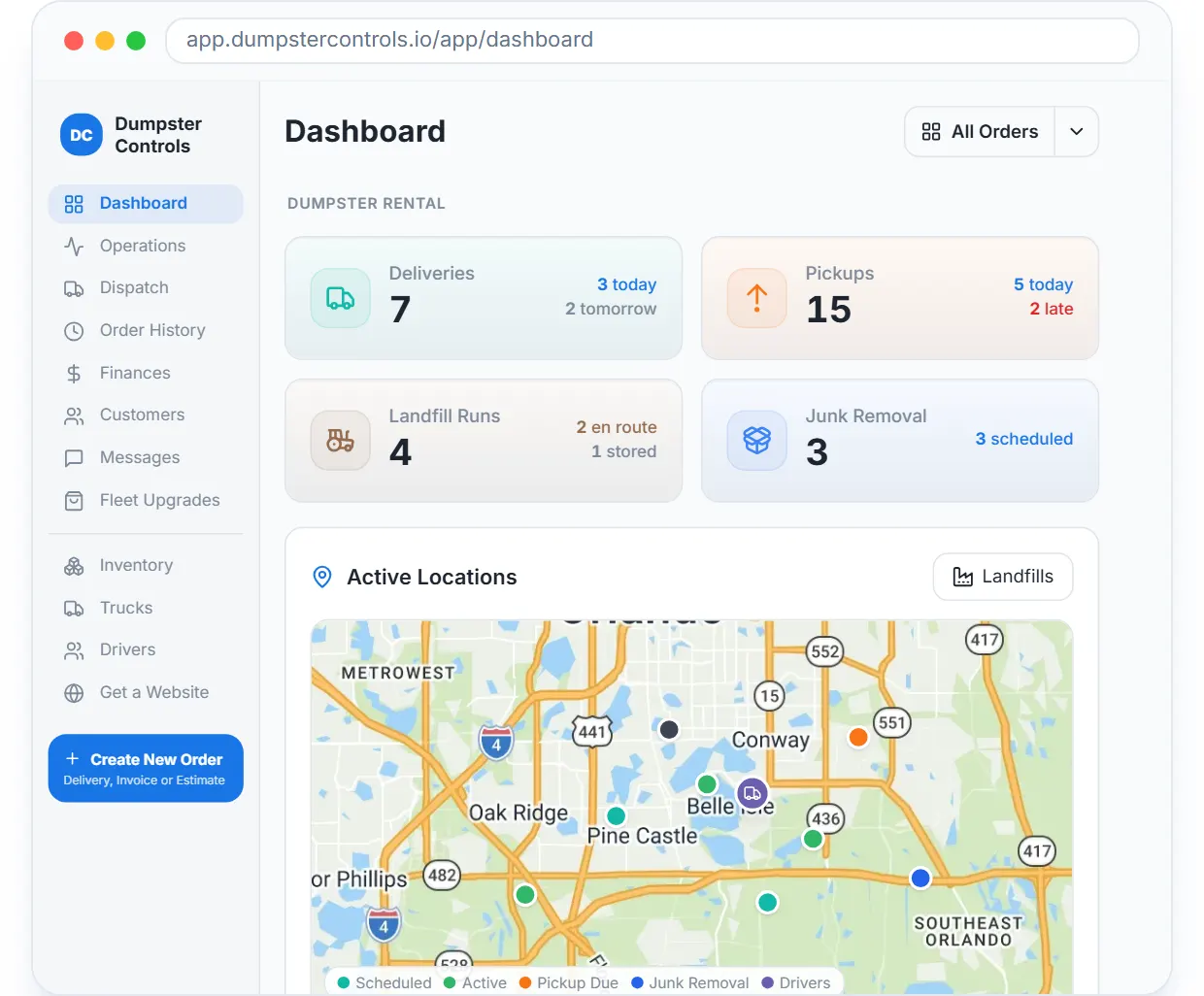
A Hub order lands on the same dashboard and board as your own orders. Sample data.
The full walkthrough is in dumpster marketplace software, and the network of brokers and haulers is described at dumpster broker network.
The second shift: software you talk to
The other change is that the app stops needing screens for everyday work. Tresha, the assistant built into Dumpster Controls, creates orders and completes deliveries, pickups and landfill runs from chat or voice, behind a confirmation card you tap.
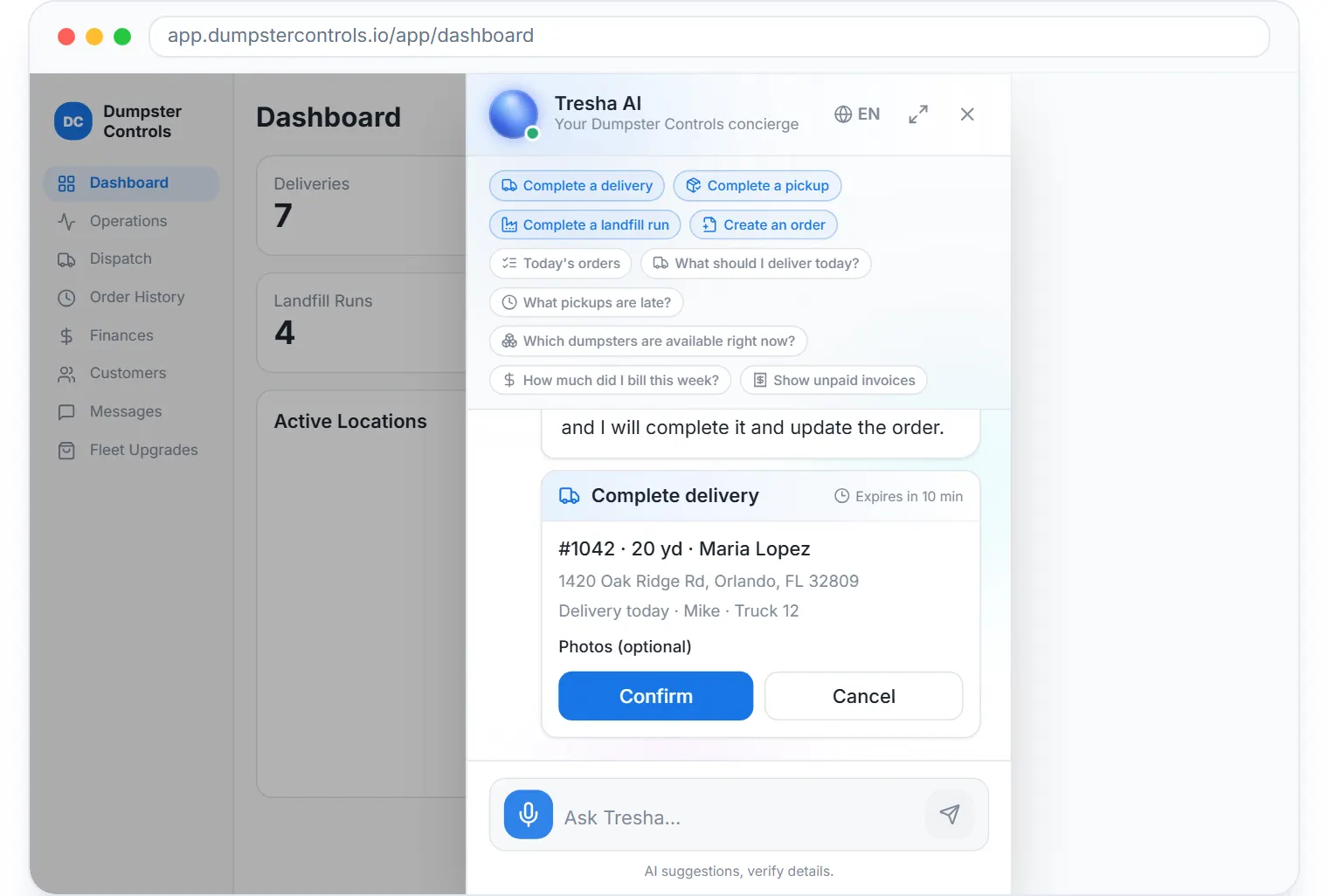
Tresha, the built-in assistant, by chat or voice, sample data.
She also answers questions about your live data in English, Spanish and Portuguese. The maintained capability list is at Tresha AI.
Dumpster Controls
The early mover advantage
Networks get more valuable as more people join. More haulers means more listed orders, which means more chances for everyone.
It also means the first companies in build the reputation and the relationships. Late joiners still benefit, but they start from behind.
The bottom line
The future of roll-off software is a better network, not a better spreadsheet. Isolated haulers will survive; networked haulers will grow.
And the whole platform, network included, is free for any fleet size. What the vendors charge instead is on dumpster rental software cost.
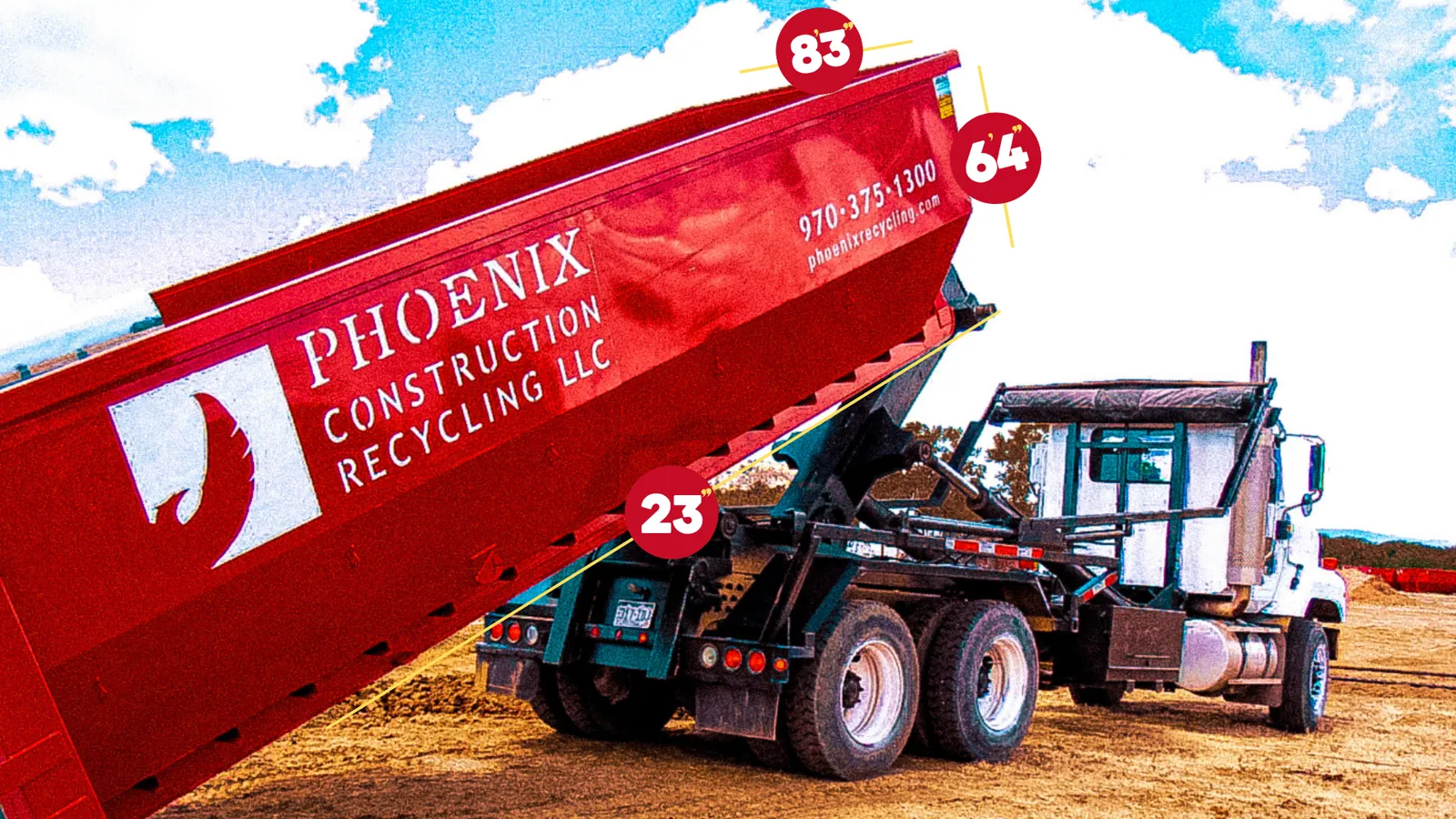
Phoenix Construction Recycling, Colorado's network-connected hauler. Photo courtesy of Phoenix Construction Recycling LLC , Colorado 970-375-1300Used with permission.
Explore the platform
- Dumpster Rental Software: the complete platform overview
- Software for Dumpster Companies: built for roll-off haulers
- Dispatch Software: drag-and-drop dispatch board
- Booking Software: online booking widget
- Driver App: free iOS & Android
- Free Plan: Free, no credit card
- Help Center: 421 step-by-step guides to every module
← PreviousDumpster Rental Pricing Guide: How to Price for ProfitNext → U.S. Landfill Pricing & Database Guide
Frequently asked questions
Is Dumpster Controls really free?
Yes. The entire app is free for any company at any fleet size: dispatch, online booking, the driver app, invoicing, the Tresha AI assistant and every other feature, with no monthly fee, no trial period and no credit card to sign up. The only cost on the free plan is optional card processing when a customer pays by card through the platform: 2.99% plus $3.99 per transaction on the free plan. The entire app is free; an optional $169 per month plan lowers that to 2.99% plus $0.30 and adds a Sponsored spotlight in the public company directory. Prices as published on dumpstercontrols.io/pricing on 2026-09-23.
Do you charge per driver, per truck or per order?
No. There is no per-driver, per-truck, per-user or per-order fee, and no order limit. A company with one truck and a company with twenty pay the same for the software: nothing.
Is there a contract?
No. There is no contract, no minimum term and no setup fee. You create the account yourself, and on the free plan there is nothing to cancel because nothing is billed. The optional $169 lower card rate plan is billed month to month.
Which countries and languages are supported?
Dumpster Controls serves hauling companies in the United States and Canada. The app interface and the Tresha AI assistant are available in English, Spanish and Portuguese. The public pages, such as the blog, the help center and the landfill finder, are in English.
How do I switch from another dumpster software?
Create a free account at dumpstercontrols.io/login, with no sales call and no credit card. Then import your customers from a CSV file using the template provided in the app; past orders can also be imported from a CSV. Container sizes and pricing are set up in Settings. The landfill database, with 1,750 active US and Canadian landfills as counted on 2026-10-01, is already loaded, so disposal sites do not need to be typed in. Step-by-step guides are at dumpstercontrols.io/help.