Broker Network & Growth Updated 2026-09-27 16 min read
How to Get More Dumpster Jobs in Competitive Markets
DC
Dumpster Controls Team
Editorial team, reviewed against the shipped product
In a crowded dumpster market the winner is rarely the company with the most trucks. It is the one that gets each job for the least money. When everyone bids on the same keywords and lists on the same directories, the price of a job keeps climbing.
This guide covers how to get more dumpster jobs without simply outspending the competition.
What a competitive dumpster rental market looks like
Several established operators with sizable fleets. National brokers advertising in the same zip codes. Paid search that costs more every quarter, the same names on every directory, and new entrants willing to work on thin margins.
Miami, Dallas, Atlanta, Los Angeles and Phoenix fit the profile. In markets like these, lead generation becomes a war of budgets rather than a contest of service.
Strategy 1: differentiate on the customer's experience
When every company offers the same sizes at similar prices, the difference is what the customer feels.
- Speed. Same-day delivery when the competition asks for a day or two captures the urgent orders.
- Communication. Automatic delivery confirmations, pickup reminders and weight reports, instead of a phone call that may not come.
- Transparent pricing. Publish your prices online and drop the surprise fees. Customers who have been burned pay for clarity.
- Photo proof. A photo of the can after delivery settles placement disputes before they start.
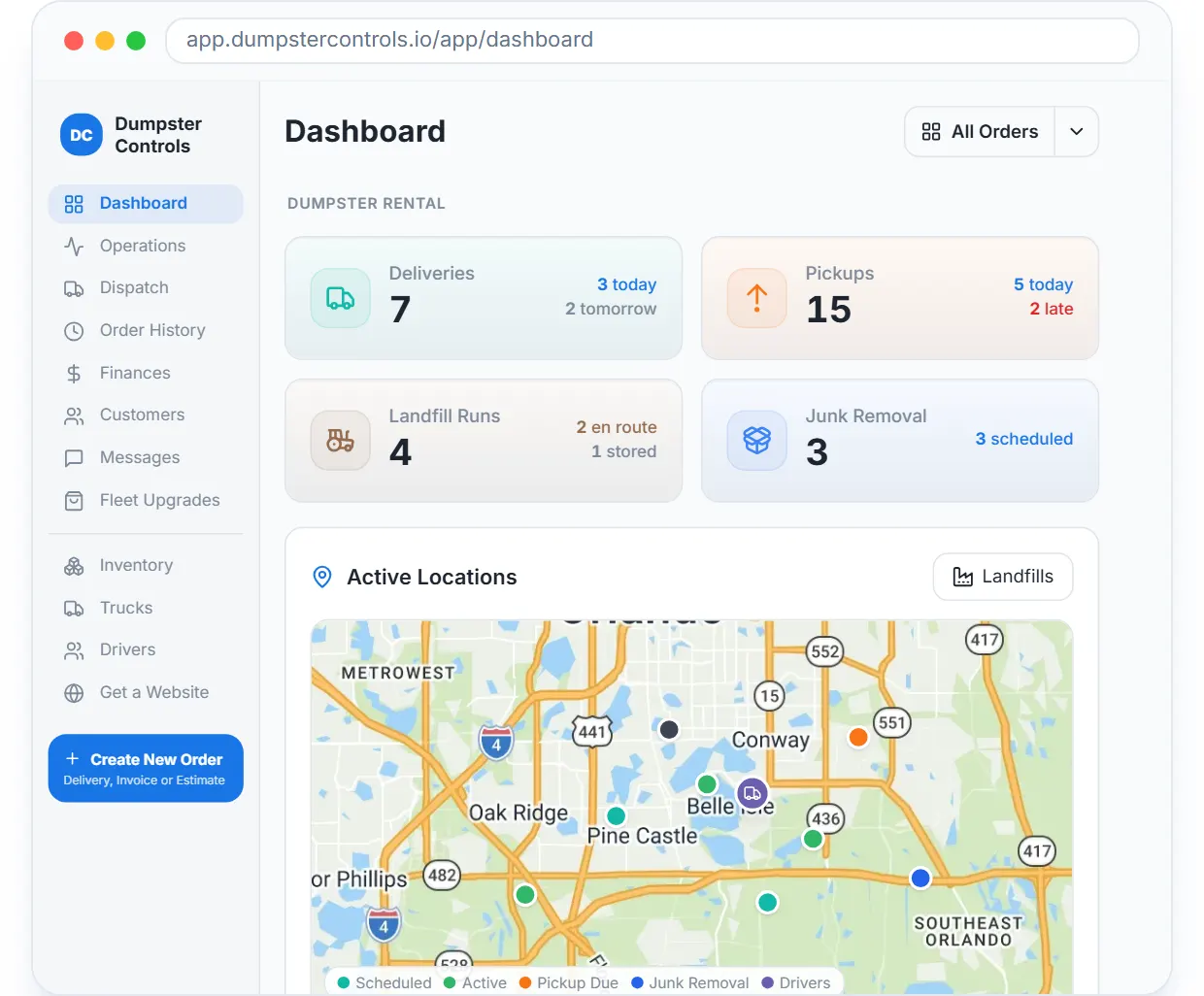
The dashboard: orders waiting, trucks on the live map, revenue by week. Measuring the cost of a job starts with seeing the week. Sample data, real app.
Strategy 2: take jobs from a dumpster broker network
Instead of fighting for the same leads, take work that someone else already sold. On the Dumpster Network HUB, companies with overflow list orders and authorized companies nearby take them.
You see the price and the distance before you accept, receive the full asking amount with no marketplace fee, and the order lands in your dispatch. It is a channel with no advertising expense, and it is what the dumpster broker software page describes.
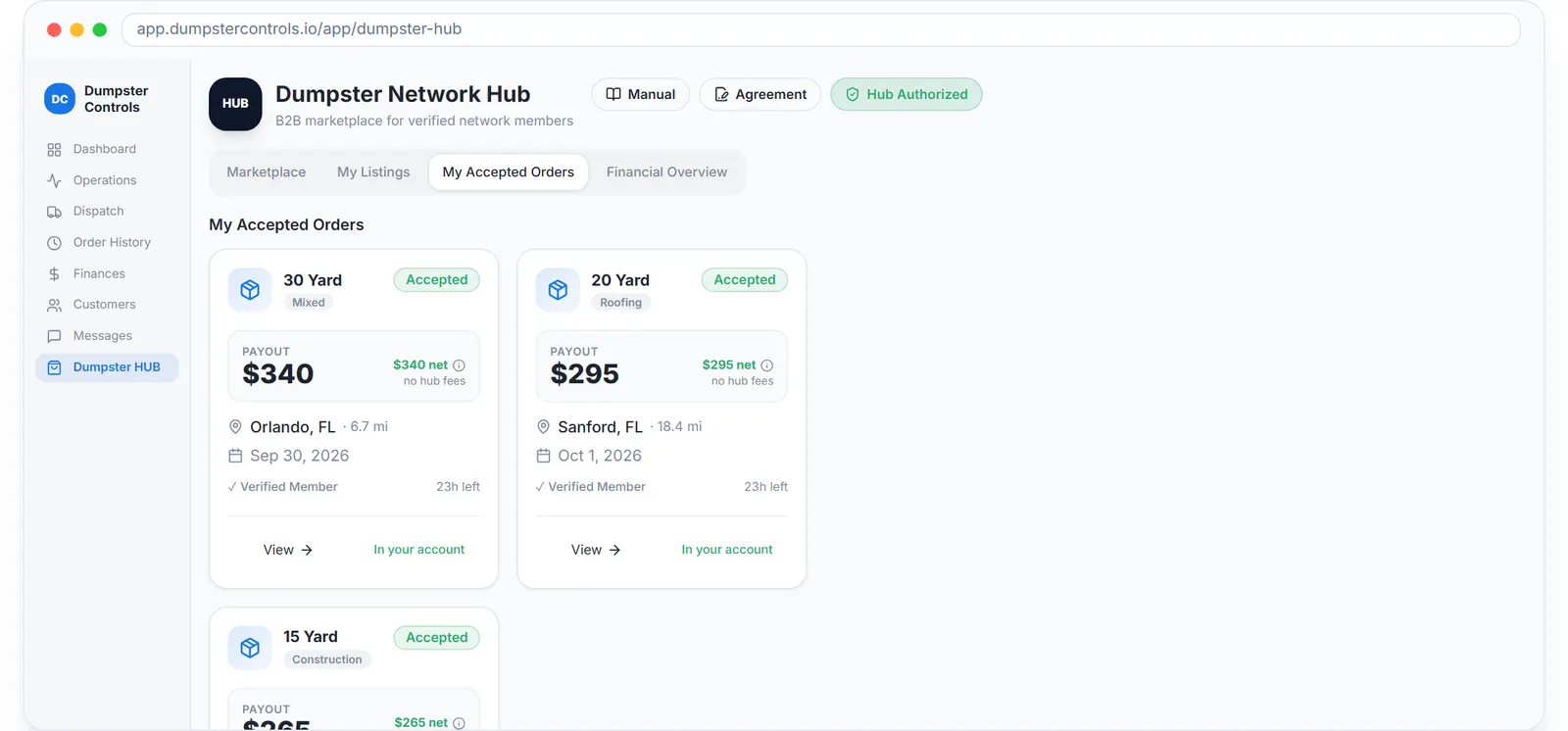
The Hub board: jobs listed by nearby companies, with size, price and distance. Take the ones that fit your route. Sample data.
Strategy 3: specialize in a niche
Generic "dumpster rental" is the most contested term. Narrower ones are cheaper and convert better.
- By debris. Concrete, roofing or yard waste dumpsters draw a specific customer with a specific job.
- By customer type. Contractor and property-management searches point to repeat buyers.
- By neighborhood. Rank for the zip codes you actually serve instead of the whole metro.
- By service. Weekend delivery, emergency same-day, or specialty waste that others refuse.
Strategy 4: build referral and repeat systems
Send a thank-you after every job with a referral offer. Give contractors a dedicated account with volume pricing, priority scheduling and monthly invoicing. Property managers and real estate agents need cans on a schedule, and a referral agreement with them is steady work.
Strategy 5: use dumpster rental software to lower your cost per job
Why the efficient operator wins the price war
Lower operating cost means you stay profitable at prices that squeeze a less efficient competitor.
Dispatch and routing
Sequenced stops and a live map cut fuel and add jobs per truck per day. See dumpster route optimization.
Invoicing on delivery
Send the invoice when the can lands. Faster invoicing means faster payment and calmer cash flow.
Online booking
Customers pick a size, a date and pay without a phone call, including after hours. That is dumpster booking software.
Fleet visibility
Knowing where every truck and can is lets you fit one more delivery into the day, which is the number that decides margin.
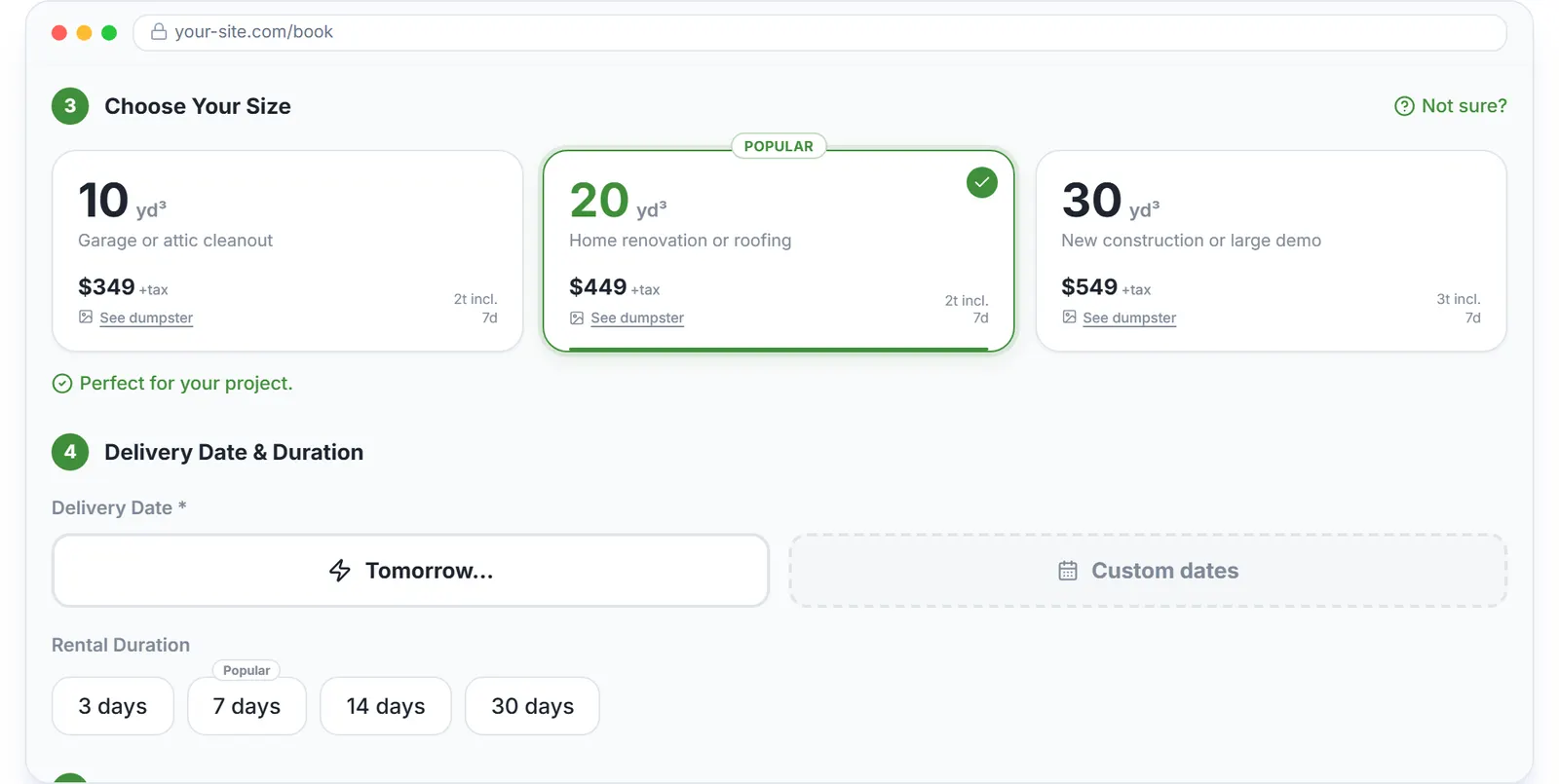
The booking widget on your own site: size, date, payment, done. It takes orders while the competition waits for the phone to ring. Sample data.
Strategy 6: content that keeps working
Paid ads stop the moment you stop paying. Pages for each city and neighborhood you serve, a pricing guide that answers the questions customers ask, guides on what debris is allowed and how local disposal works, and an FAQ written for voice and AI search keep bringing leads after the ad budget is gone.
Content takes months to compound. Once it does, the marginal lead is close to free.
Measure the cost of each dumpster job by channel
Four numbers, tracked per channel, tell you where the next dollar should go: cost per lead, cost per booked job, lifetime value of the customer including reorders, and revenue per dollar spent.
Most haulers find their cheapest jobs come from referrals and repeat customers, then network work, then paid ads. Spend in that order.
The tools above are the standard kit of dumpster rental software, and the dumpster rental software cost page shows what each vendor charges for them.
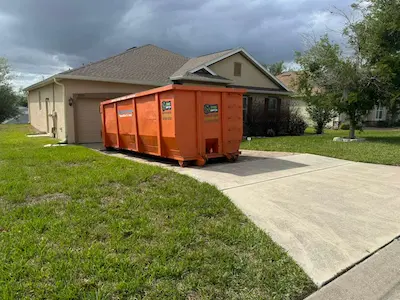
Dumpster Strong wins repeat residential jobs through speed and reliability. Photo courtesy of Dumpster Strong , Orlando, FL 407-901-0253Used with permission.
Explore the platform
- Dumpster Rental Software: the complete platform overview
- Software for Dumpster Companies: built for roll-off haulers
- Dispatch Software: drag-and-drop dispatch board
- Booking Software: online booking widget
- Driver App: free iOS & Android
- Free Plan: Free, no credit card
- Help Center: 423 step-by-step guides to every module
← PreviousDumpster Broker Work vs. Direct Sales: Finding the Right MixNext → Dumpster Controls Is Now 100% Live in Canada: CAD Payments, Canadian Stripe, Free Software
Frequently asked questions
Is Dumpster Controls really free?
Yes. The entire app is free for any company at any fleet size: dispatch, online booking, the driver app, invoicing, the Tresha AI assistant and every other feature, with no monthly fee, no trial period and no credit card to sign up. The only cost on the free plan is optional card processing when a customer pays by card through the platform: 2.99% plus $3.99 per transaction on the free plan. The entire app is free; an optional $169 per month plan lowers that to 2.99% plus $0.30 and adds a Sponsored spotlight in the public company directory. Prices as published on dumpstercontrols.io/pricing on 2026-09-23.
Do you charge per driver, per truck or per order?
No. There is no per-driver, per-truck, per-user or per-order fee, and no order limit. A company with one truck and a company with twenty pay the same for the software: nothing.
Is there a contract?
No. There is no contract, no minimum term and no setup fee. You create the account yourself, and on the free plan there is nothing to cancel because nothing is billed. The optional $169 lower card rate plan is billed month to month.
Which countries and languages are supported?
Dumpster Controls serves hauling companies in the United States and Canada. The app interface and the Tresha AI assistant are available in English, Spanish and Portuguese. The public pages, such as the blog, the help center and the landfill finder, are in English.
How do I switch from another dumpster software?
Create a free account at dumpstercontrols.io/login, with no sales call and no credit card. Then import your customers from a CSV file using the template provided in the app; past orders can also be imported from a CSV. Container sizes and pricing are set up in Settings. The landfill database, with 1,750 active US and Canadian landfills as counted on 2026-10-01, is already loaded, so disposal sites do not need to be typed in. Step-by-step guides are at dumpstercontrols.io/help.