Business Guide
How to Start a Dumpster Rental Business in 2026
The market sets the price of a 20-yard rental. How well you run the truck sets the profit. Here is the startup path, step by step, with the software cost at zero.
By Daniel Teixeira Founder, Dumpster ControlsUpdated September 28, 2026 4 min read
To start a dumpster rental business in 2026 you pick a model (owner-operator, broker or both), form the company, get the CDL, permits and insurance, buy a used roll-off truck and a mix of cans, open landfill accounts and put a booking page online before the first delivery. Across the companies in our directory that publish prices, a 20-yard rental is listed at a median of $449. The software to run all of it is free for any fleet size on Dumpster Controls.
$449
Median published 20-yard price 798 published prices
$175 to $990
Range of published 20-yard pricesSame can, very different money
972
US companies publishing a price Updated September 28, 2026
Read it: A new dumpster rental business lives in that spread. The price is set by the market; the profit is set by how well you run the truck. Source: Dumpster Controls Market Data, 972 companies, updated September 28, 2026, full set on market data.
Is a dumpster rental business a good business in 2026?
Yes, for three reasons, and none of them needs a forecast.
Demand
Demand is structural
Construction, renovation, junk removal and commercial cleanouts all need a can on site, and none of them is going away.
Room to enter
The industry is fragmented
Independent and regional operators serve most metros, which leaves room for a new company that delivers on time and answers the phone.
Tools
The technology gap has closed
A two-truck company can run online booking, dispatch, a driver app and a marketplace for overflow, the same tools the big fleets use, at no software cost.
How to start a dumpster rental business: the checklist
Nine steps, in the order most owner-operators take them. Each one has its own section below.
1
Choose the model
Owner-operator with your own trucks, broker with none, or a hybrid of both.
2
Form the company
An LLC or S-Corp, an EIN, state tax registration and a business bank account.
3
Licenses and permits
A Class B CDL for whoever drives, USDOT and MC numbers, and your city's hauler license.
4
Insurance
Commercial auto per truck, general liability and workers comp per driver. Get quotes from several brokers.
5
Truck and cans
A used roll-off truck and a mix of 10, 15, 20 and 30-yard containers, enough that the truck never waits.
6
Landfill accounts
Open accounts at every facility within reach, and keep every gate ticket from day one.
7
Prices from cost
Build the floor from your own costs, then check it against the published medians.
8
Booking page and marketing
A website that takes orders, Google Business Profile, a tight Google Ads campaign and contractor visits.
9
Software from day one
Booking, dispatch, driver app and invoicing in one place: free dumpster rental software.
What a dumpster rental business has to buy
We do not publish startup cost figures we cannot source. Truck and container prices move too much by region and condition for a national table to be honest, so this table says what each model requires instead.
| Startup model | What you buy | First revenue depends on |
|---|---|---|
| Broker / marketplace only | Registration, insurance, a website with booking, marketing | How fast the first customers book |
| Owner-operator | One used roll-off truck, a set of dumpsters, insurance, permits, marketing | Truck delivery and permit timing |
| Small fleet | Two trucks, a larger container set, a second driver, a yard | Hiring and financing |
| New trucks, larger fleet | New equipment on order, dispatcher, yard, financing | Factory lead times |
Highlighted row: the most common start. No prices on purpose: they vary too much by region and condition.
In practice: Most haulers start as owner-operators with one used truck, a hooklift or cable system, and dumpsters financed through a manufacturer or bought used.
Choosing a dumpster business model
Most control
Owner-operator
Buy a truck, buy dumpsters, deliver yourself or hire drivers. Highest margin per job, highest capital, most control.
No trucks
Broker or marketplace operator
Acquire customers through booking and marketing, then list every job for a hauler to deliver. A thinner margin per job and a fast start. Read how to become a dumpster broker.
Where most arrive
Hybrid
Run one or two trucks in your core area and list overflow or out-of-territory jobs on the marketplace.
A note on software, since it comes up often: the Dumpster Controls free plan is for companies that own and operate their own dumpster or junk removal business, including the overflow they place with other haulers. A brokerage-only business, a franchise system or a group of companies is served by the paid Enterprise plan. See the terms of use or write to info@dumpstercontrols.io.
Trucks, dumpsters, and equipment
The truck. A used roll-off truck is the usual starter; a refurbished newer unit costs more and breaks less; a new truck is the most expensive path and the longest wait. Hooklift systems are faster and cleaner to operate; cable systems are cheaper.
The cans. Plan on a mix of 10, 15, 20 and 30-yard containers, enough of them that one truck is never waiting for an empty. New dumpsters cost more per unit; used ones need inspection for rust and door hardware.
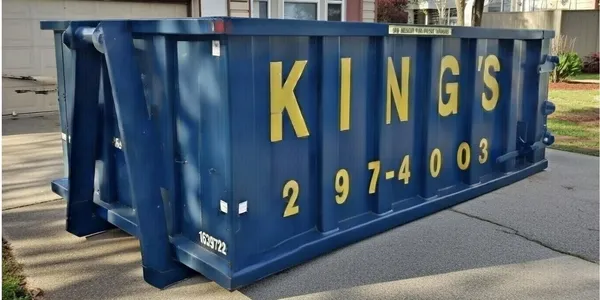
King's Dumpsters started small and grew through smart software. Photo courtesy of King's Dumpsters297-4003Used with permission.
Permits, licensing, and insurance
You will need an LLC or S-Corp, an EIN and state tax registration, a Class B CDL for whoever drives, USDOT and MC numbers, and whatever hauler license your city requires. Local licensing varies more than anything else on this list.
In practice: Insurance is the ongoing cost new haulers most often underestimate. Commercial auto per truck, general liability and workers comp per driver: get quotes from several brokers before launch.
Building landfill relationships
The landfill is your most important supplier. On day one, visit every facility within reach of your service area, open accounts, and ask about volume rates.
Keep every gate ticket so you have real data to negotiate with after the first quarter. Fees by facility are on the landfill tipping fees page, and the US landfill pricing guide explains how the fees work.
Dumpster rental pricing from day one
Build prices from cost up, not from competitors down. The published medians by size and by state, the cost stack of one order, fuel surcharge, weight allowance and extra-day pricing are all in the dumpster rental pricing guide.
The market sets the price. Your operation sets the profit.
Marketing and lead generation for a new dumpster company
New haulers need three channels working from day one.
Channel 1
A website with online booking
Not a brochure. A page where the customer picks a size and a date and pays. That is dumpster booking software, and it captures the customers who never call.
Channel 2
Google Ads in a tight geography
Target 'dumpster rental' plus your city and a handful of long-tail variations. Tight geography matters more than bid price.
Channel 3
Google Business Profile and reviews
Set it up on day one and ask every customer for a review after pickup. The review count is what moves organic conversion.
Add contractor referrals, Yelp and the Hub as they come. For crowded metros, read how to get more dumpster jobs in competitive markets.
Software from day one: the dumpster rental software you need
One system, not five. The free dumpster rental software from Dumpster Controls covers booking with card payment through Stripe, dispatch with a live map, a native driver app for iOS and Android, invoicing, the finances with profit per order, and the Dumpster Net Hub for overflow.
It is free dumpster rental software for any fleet size, with no card on file and no monthly fee. QuickBooks Online syncs natively if your accountant wants it, and what other vendors charge for the same kit is on the dumpster rental software cost page.
In practice: Sign up before the truck arrives. The booking page can take orders while you are still waiting on permits, and the first customer lands on the same board your driver will use.
Your first 90 days as a dumpster rental business
1
Days 1 to 14: setup
Form the company, get the EIN and the bank account, and buy the truck and the first set of cans. File insurance and permits. Sign up for Dumpster Controls and put the booking page on a basic website.
2
Days 15 to 45: launch
Start the Google Ads campaign, activate Google Business Profile and start asking for reviews. Visit local contractors, request Hub access for overflow jobs, and run your first paid deliveries.
3
Days 46 to 90: optimize
Refine prices from your own cost data. Renegotiate landfill rates with a quarter of tickets in hand. Add a dispatcher or a virtual assistant when the order volume justifies it.
Scaling a dumpster rental business from 1 truck to 10
The jump from one truck to three is the hardest. Cash gets tight, you hire and manage drivers, and dispatch becomes a real job.
Beyond three trucks, growth is mostly a marketing and capital problem. Add a truck when utilization stays high and the marketplace can no longer absorb your overflow; the longer version is how to scale a dumpster rental business.
Common dumpster business startup mistakes
Capital
A new truck on day one
Lease or buy used until the volume is proven.
Equipment
Too few dumpsters
The truck waits for empties, and a waiting truck earns nothing.
Risk
Underinsuring
Cheap insurance gets expensive after one claim.
Pricing
Matching competitors
Price from cost, then check the market. Not the other way around.
Sales
No online booking
You lose the customers who never call.
Disposal
One landfill account
Without a second gate you have nothing to compare and nothing to negotiate with.
What this means for you
- Price from your own cost stack and check it against the published medians; the market sets the price, your operation sets the profit.
- Booking, dispatch, driver app, invoicing and the Hub ship together at no cost, so the software line of the plan is zero.
- Open several landfill accounts and keep every ticket: that data is your first negotiation.
How to start a dumpster rental business: frequently asked questions
How much does it cost to start a dumpster rental business in 2026?
It depends on the model. An owner-operator start needs a roll-off truck (usually used), a set of dumpsters, commercial insurance, permits and a marketing budget; the truck and the cans are most of it, and the prices vary enough by region and condition that we do not publish a national figure. A broker-style start needs no equipment and launches on registration, insurance, a website and a marketing budget.
Can I start a dumpster rental business with no trucks?
Yes. The broker model lets you start without equipment: you acquire customers through online booking and marketing, then list each job for a hauler who delivers it, and you earn the difference between the customer price and what the hauler receives. On Dumpster Controls the free plan is for companies that own and operate their own trucks; a brokerage-only business runs on the paid Enterprise plan.
How profitable is a dumpster rental business?
Profit per order is price minus landfill fee, fuel, driver time and an allocation of insurance and office. The published median price for a 20-yard rental across the companies in our directory is a useful reference for revenue; the cost side is local, so measure your own profit per order from the first delivery instead of trusting a national margin.
Do I need a CDL to drive a roll-off truck?
In practice, yes: roll-off trucks are heavy enough that a Class B commercial driver's license is required. If you are the owner-operator you can earn it yourself before launch; otherwise you hire CDL drivers from day one. Check your state's rules and the truck's rating.
What is the best software to run a new dumpster business?
For a new hauler, Dumpster Controls is free for any fleet size with unlimited orders, no card and no monthly fee, and it includes online booking, dispatch, the driver app, Stripe payments, invoicing and the Dumpster Net Hub marketplace. You can run a real business with no software cost while you build revenue.
How long does it take to break even?
It depends on how much of the equipment is financed and how fast the first customers arrive. Owner-operators who launch with online booking, a Google Business Profile and a few contractor relationships reach steady volume sooner; a broker-style start has almost no fixed cost to cover.
Is the dumpster rental industry growing?
Construction, residential renovation and junk removal keep demand for roll-off containers steady, and the market remains fragmented, with independent operators in nearly every metro. That is why there is still room for a new company that executes well.
How do I get my first customer?
Launch a booking page on day one, run a tight Google Ads campaign in your service area, set up Google Business Profile and Yelp, and visit local contractors who rent cans regularly. Most new owners get the first paid order from one of those four channels within the first weeks.